
China prioritizes industrial, supply chains stability in reviving industrial economy
2022-07-07

BEIJING — China will make the unimpeded and stable operation of its industrial and supply chains a top priority, as it looks to revive its industrial economy after flare-ups of COVID-19 in recent months.
The industrial sector is the backbone and growth engine of the Chinese economy, said the Ministry of Industry and Information Technology (MIIT) in a recent video teleconference on shoring up the industrial economy. It vowed incremental efforts in policy implementation to ensure reasonable expansion in the industrial sector in the second quarter of the year.
Recent official data showed slower growth in the profits of China's major industrial firms. The enterprises, each with annual main business revenue of at least 20 million yuan (about $2.98 million), saw their profits expand 3.5 percent year-on-year in the first four months of 2022, a sharp contrast to the 8.5-percent growth in the first three months.
The Chinese industrial economy inevitably took a blow over the past three months as the Omicron variant has forced factories in metropolises like Shanghai and Shenzhen and the heavy-industry region of Jilin province to suspend production. From high-tech semiconductors, auto parts, and electronics to textile and garment industries, factory activities were disrupted across different fields. Logistics bottlenecks also emerged in the period.
China has moved swiftly to smoothen transport and logistics and adopted a slew of measures, such as the "white list" approach, to help enterprises in virus-hit regions resume production and guarantee the supply of essential parts, equipment and products.
A manufacturing subsidiary of Shanghai Challenge Textile Co Ltd had seen around 1,350 of its employees return to work as it was included in the first batch of 666 companies on the city's "white list" designed to support firms to resume production amid COVID-19 control back in April.
"Since we resumed production, the local government has given us great support to cope with labor shortages and raw material transportation," said Yang Shibin, president of the company.
The company's output has already surpassed the level before Shanghai took a hit from the virus two months ago, and the orders previously delayed due to the epidemic have been basically recovered, said Yang.
Lenovo, the Chinese personal computer giant, also faced challenges in production. "The epidemic affected our factories in Shenzhen in the first quarter of the year, but production lines in the cities of Hefei and Wuhan continued normal operations, which made up for the loss," said Yang Yuanqing, Lenovo Group's chairman and CEO.
The MIIT has vowed to coordinate virus control with industrial production, helping the enterprises stabilize production amid the epidemic and improve the "closed-loop" management plans.
"We should make the unimpeded and stable operation of the industrial and supply chains a top priority in reviving the industrial economy," said MIIT Minister Xiao Yaqing. He stressed that the ministry would ensure the stable operations of the chains in critical enterprises, industries, and regions.
Apart from leading companies in the industrial fields, the MIIT also pledged to help boost support for small and medium-sized enterprises (SMEs).
Sichuan province has formed 10 working groups on stabilizing industrial chains in electronics and equipment manufacturing. In Henan province, the local government has helped 40 "little giant firms" characterized by professionalization, refinement, specificity, and novelty to gain credit for financing.
"The ministry is organizing service platforms for SMEs to visit the enterprises, industrial parks and clusters and address the difficulties and demands of the SMEs," said Liang Zhifeng, an official with MIIT.
The MIIT will also tap the potential of digitalization and green upgrading to boost the industrial economy. It will start the infrastructure projects of 5G and industrial internet ahead of schedule, accelerate energy-saving and carbon-reducing transformation in key fields, and launch a new round of new-energy vehicle promotion activities in rural areas, according to the video teleconference.
The industrial sector is the backbone and growth engine of the Chinese economy, said the Ministry of Industry and Information Technology (MIIT) in a recent video teleconference on shoring up the industrial economy. It vowed incremental efforts in policy implementation to ensure reasonable expansion in the industrial sector in the second quarter of the year.
Recent official data showed slower growth in the profits of China's major industrial firms. The enterprises, each with annual main business revenue of at least 20 million yuan (about $2.98 million), saw their profits expand 3.5 percent year-on-year in the first four months of 2022, a sharp contrast to the 8.5-percent growth in the first three months.
The Chinese industrial economy inevitably took a blow over the past three months as the Omicron variant has forced factories in metropolises like Shanghai and Shenzhen and the heavy-industry region of Jilin province to suspend production. From high-tech semiconductors, auto parts, and electronics to textile and garment industries, factory activities were disrupted across different fields. Logistics bottlenecks also emerged in the period.
China has moved swiftly to smoothen transport and logistics and adopted a slew of measures, such as the "white list" approach, to help enterprises in virus-hit regions resume production and guarantee the supply of essential parts, equipment and products.
A manufacturing subsidiary of Shanghai Challenge Textile Co Ltd had seen around 1,350 of its employees return to work as it was included in the first batch of 666 companies on the city's "white list" designed to support firms to resume production amid COVID-19 control back in April.
"Since we resumed production, the local government has given us great support to cope with labor shortages and raw material transportation," said Yang Shibin, president of the company.
The company's output has already surpassed the level before Shanghai took a hit from the virus two months ago, and the orders previously delayed due to the epidemic have been basically recovered, said Yang.
Lenovo, the Chinese personal computer giant, also faced challenges in production. "The epidemic affected our factories in Shenzhen in the first quarter of the year, but production lines in the cities of Hefei and Wuhan continued normal operations, which made up for the loss," said Yang Yuanqing, Lenovo Group's chairman and CEO.
The MIIT has vowed to coordinate virus control with industrial production, helping the enterprises stabilize production amid the epidemic and improve the "closed-loop" management plans.
"We should make the unimpeded and stable operation of the industrial and supply chains a top priority in reviving the industrial economy," said MIIT Minister Xiao Yaqing. He stressed that the ministry would ensure the stable operations of the chains in critical enterprises, industries, and regions.
Apart from leading companies in the industrial fields, the MIIT also pledged to help boost support for small and medium-sized enterprises (SMEs).
Sichuan province has formed 10 working groups on stabilizing industrial chains in electronics and equipment manufacturing. In Henan province, the local government has helped 40 "little giant firms" characterized by professionalization, refinement, specificity, and novelty to gain credit for financing.
"The ministry is organizing service platforms for SMEs to visit the enterprises, industrial parks and clusters and address the difficulties and demands of the SMEs," said Liang Zhifeng, an official with MIIT.
The MIIT will also tap the potential of digitalization and green upgrading to boost the industrial economy. It will start the infrastructure projects of 5G and industrial internet ahead of schedule, accelerate energy-saving and carbon-reducing transformation in key fields, and launch a new round of new-energy vehicle promotion activities in rural areas, according to the video teleconference.
RELATED STORIES
 2026年7月8日起,美国CPSC证书电子申报(eFiling)强制实施,合规指南来了!
  Notice of Completion of Relocation
  NINGBO MERRY GARMENTS CO., LTD to Join 139th Canton Fair
  Hamas takes control of Gaza again during the ceasefire, seizing command of family militias and triggering internal conflicts
 - IMF Chief: The global economy is better than expected, but the real test is coming
 The Federal Reserve released the minutes of the September meeting, with most members agreeing to a 25 basis point rate cut.
  特朗普已签字,印度人“陷入恐慌”……印度返美机票价格暴涨110%,销售火爆!印度外交部:将带来人道主义后果
  The global port performance rankings have been released: Seven Chinese ports have made it into the top ten.
  Trump announced that he will impose high tariffs on imported building materials, furniture, and pharmaceuticals.
  【国际锐评】在关税问题上,美政府“选票优先、百姓靠边”
  新疆棉影响升级,或将波及近百万家公司?
 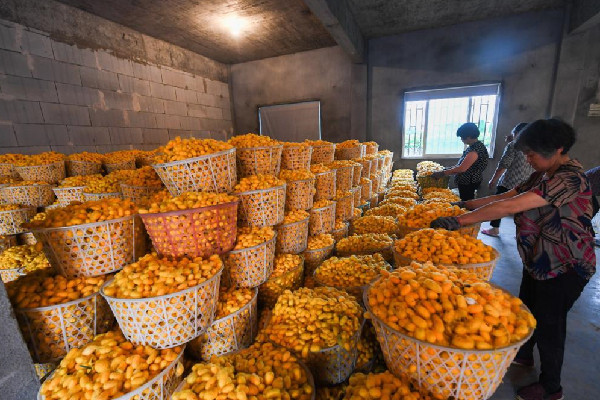 Silkworm farmers embrace harvest season of 'golden cocoons' in Tongxiang, E China
 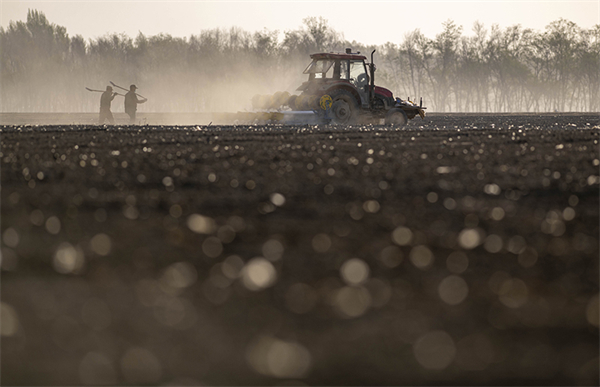 New national agricultural demonstration zone approved in Xinjiang
 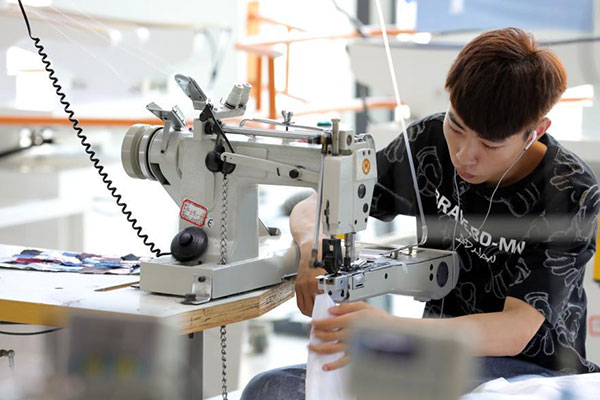 服饰行业大洗牌,品牌拼内功的时候到了
  突传重磅!拜登将于本周宣布降低对华关税?利好究竟有多大?